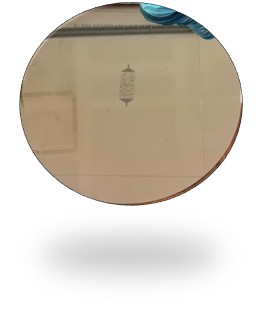
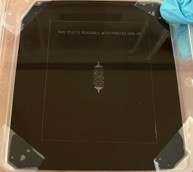
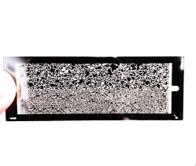
The MFFRL is fully equipped with microfabrication station for fabricating PDMS devices for microfluidics using softlithography. Driven by demand for of reservoir/ Lab on-a-chip, there’s a shift towards microfabricated systems in oil and gas, chemical, and biomedical fields. The microfluidic chip which represents the pore structure of a naturally occurring oil-bearing reservoir rock. These systems promise higher throughput, improved statistics, parallel measurements, and minimal waste. The microchips created through Soft lithography’s in our Lab represent the pore structure and surface characteristics analogous to those of real rocks so that a relationship can be developed between micromodels and original reservoir.
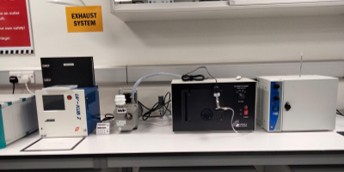
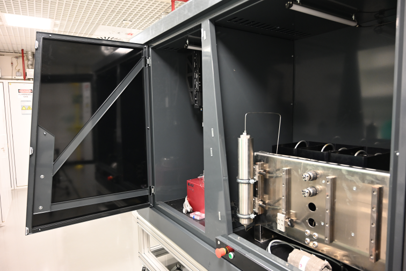
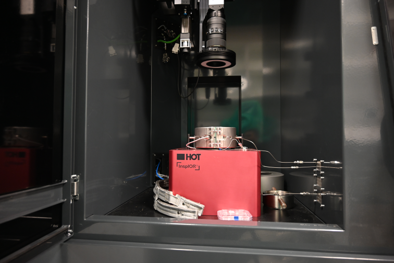
The MFFRL is equipped with a range of tools to examine flow behavior within microfluidic cells. For managing fluid flow within single-chip channels, we employ pressure-driven and displacement pumps linked to a high-performance multichannel flow controller. We also have a high-pressure, high-temperature microfluidic platform for studying enhanced recovery, underground storage, PVT, and flow assurance. This platform is operated using InspIOR Vision, a software for process control, visualization, and data management. Additionally, MFRL houses optical imaging systems like fluorescence and confocal microscopes for use with microfluidic devices, offering high lateral resolution and excellent sensitivity.
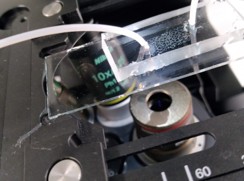
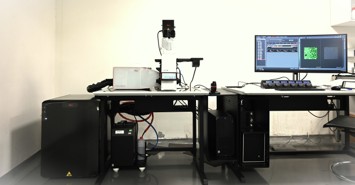
In our advanced facility, the confocal microscope is a precision revolution in microscopy at MFFRL. This powerful tool enables researchers to explore materials and fluids deeply, capturing high-resolution 3D images that reveal unprecedented insights into sample structures and behaviors. Boasting high-resolution imaging, it ensures exceptional clarity even for the minutest sample details, facilitating comprehensive understanding through 3D visualization. The MFFRL confocal microscope is instrumental in capturing high-res images of intricate microchannels, providing invaluable insights into microscale fluid dynamics. With real-time imaging capabilities, it observes and analyzes fluid flow patterns within microfluidic devices, crucial for optimizing systems. Fluorescence capabilities aid tracer studies, precisely tracking particle movement and providing valuable data for device enhancement. The confocal microscope facilitates Z-stack imaging for reconstructing 3D microfluidic structures, particularly beneficial for studying complex architectures and understanding fluid and particle distribution. Beyond imaging, equipped with advanced analytical tools, it enables quantitative analysis—extracting data on flow rates, particle concentrations, and velocity profiles—contributing to a comprehensive understanding of microfluidic phenomena. Join us at MFFRL in pioneering precision-driven microfluidics research
The Microfluidics Flooding System HTHP distinguishes itself by minimizing fluid usage due to small pore throats and complex flow geometries, ensuring sustainability in research practices. Moreover, the reusability of chips allows for the repeatability and comparison of flooding experiments with identical properties across multiple micromodels. The Microfluidic System is meticulously tailored for ambient and reservoir condition EOR flooding experiments, as well as gases investigations (H2 Storage, CCS,). Operating seamlessly through integrated process control, visualization, and data management software, this system facilitates efficient automated workflows. The Microfluidics Flooding System HTHP stands as a pinnacle microfluidic flooding device, serving as a professional platform for a spectrum of applications, including PVT, and porous media flow solutions. The transparent glass-silicon-glass micromodels redefine experimental possibilities by emulating reservoir rock analogs. Through the precision of etching the porous structure of any reservoir material into silicon, the micromodel offers time-efficient and rapid experimental investigations. It provides full visual access and fast analysis tools for instantaneous saturation computation, enabling reservoir conditions experiments.